
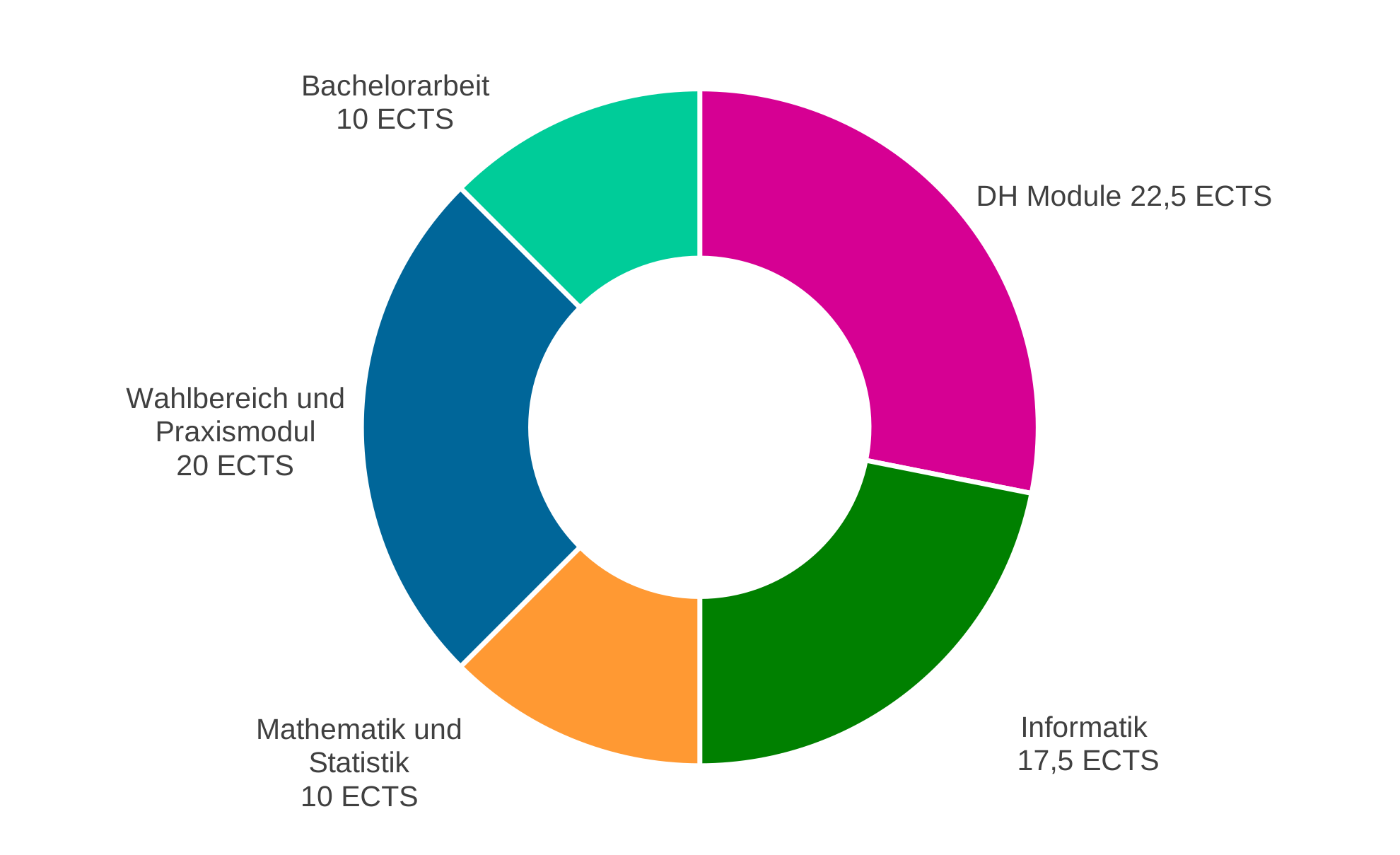
The Digital Humanities and Social Sciences program is part of a two-subject Bachelor’s degree, in which a total of 180 ECTS credits are earned. If the subject is studied as the first subject, the Bachelor’s thesis (10 ECTS credits) is also written in this subject, bringing the total to 80 ECTS credits. If studied as the second subject, the total is 70 ECTS credits. (The remaining ECTS credits in the two-subject Bachelor’s degree are earned in key skills modules.)
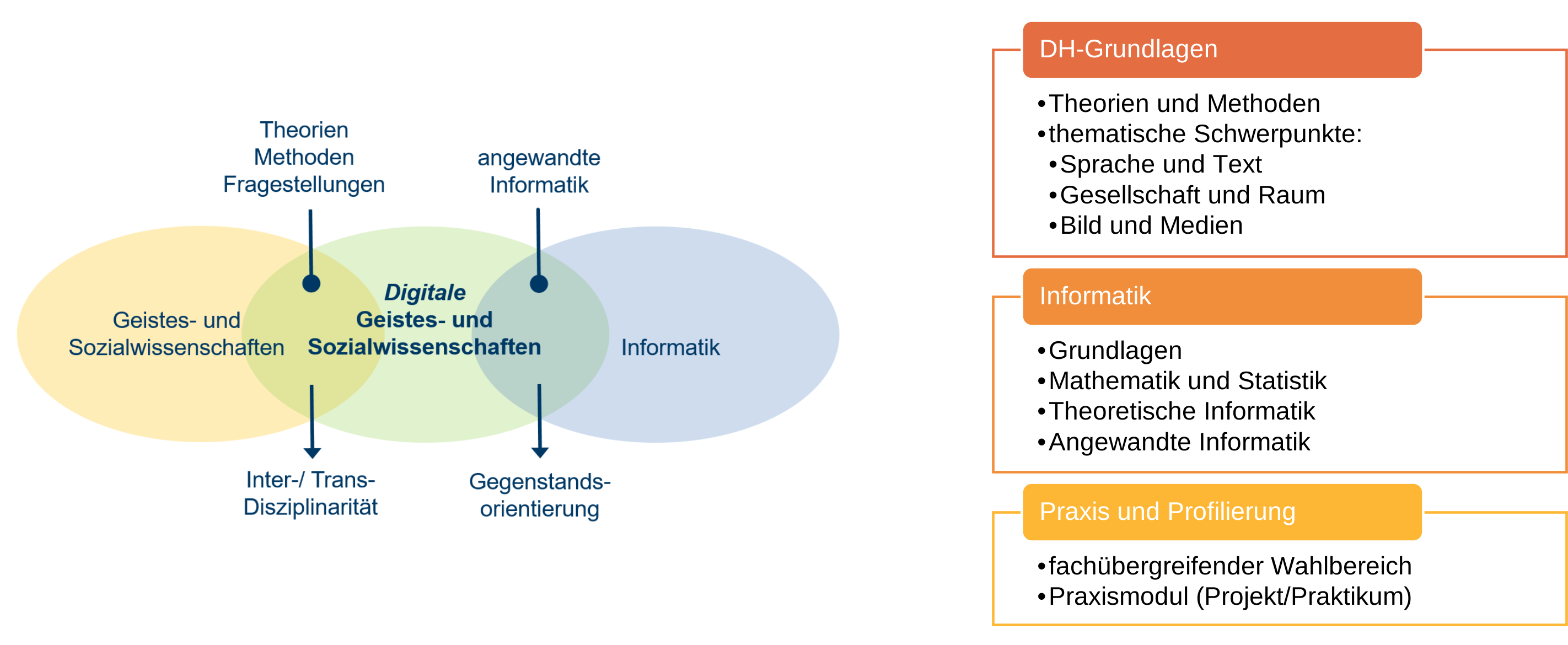
This degree program forms an interface between the (often very different) disciplinary cultures of the humanities and social sciences and computer science. Students will be equipped to develop and apply new procedures and methods for researching social science and humanities data, as well as to understand and reflect on the socio-technical prerequisites of digitalization and the profound societal changes it entails. An elective component with a variety of courses and a practical module offer opportunities for individual specialization.
The following diagram schematically shows how many ECTS credits are acquired in each area (details are provided in the subject examination regulations):
Sample study plan
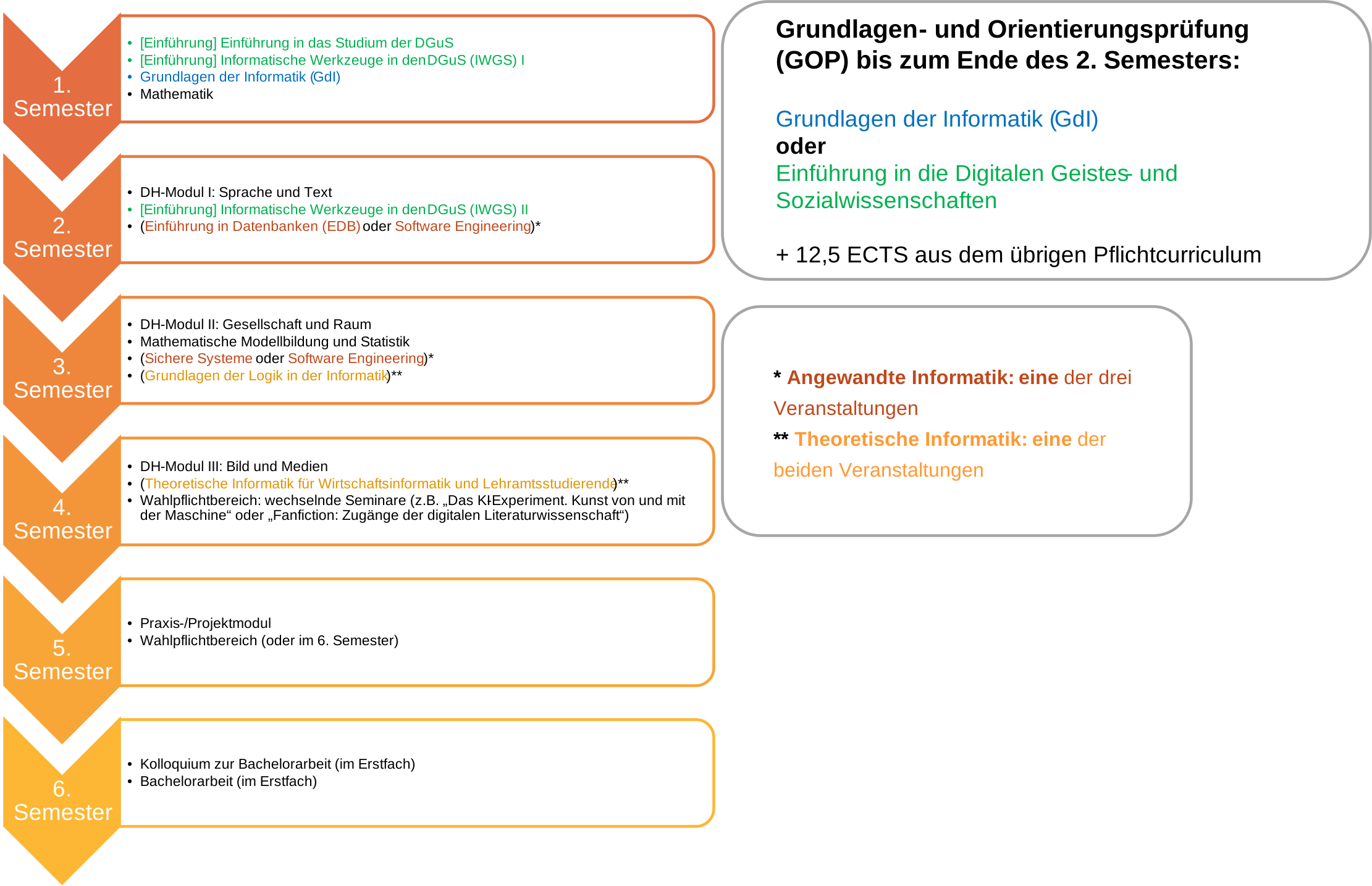
Notes on the diagram:
- The module Introduction to Digital Humanities and Social Sciences consists of three parts: a lecture, and Informatics Tools for the Humanities and Social Sciences (IWGS) I and II. All three parts must be taken (and are also highly recommended as an introduction to the subject and a gentle introduction to programming).
- Fundamentals of Computer Science (GdI) is offered every semester. If you complete IWGS I in the first semester, GdI may be easier in the second semester.
- For the basic and orientation examination (GOP), either GdI or the complete module Introduction to Digital Humanities and Social Sciences is required. If the other module has also been completed, it will of course count towards the required 12.5 ECTS credits from the rest of the compulsory curriculum!
- Generally speaking, you don’t have to follow the model study plan; you can choose a completely different order. However, make sure you complete foundational courses (such as those in the introductory module or GdI) as early as possible, keep the requirements of the GOP in mind, and bear in mind that many courses are not offered every semester.
- The three modules DH1, DH2 and DH3 do not have to be taken one after the other.
- The bachelor’s thesis is written only in the respective first subject.
Study plan with module titles and exam numbers
Modul Einführung in die Digitalen Geistes- und Sozialwissenschaften (1. Teil)
- 78811 Einführung in das Studium der Digitalen Geistes- und Sozialwissenschaften
- 78812 Informatische Werkzeuge in den Geistes- und Sozialwissenschaften I
Modul Grundlagen der Informatik
- 30601 Grundlagen der Informatik (Klausur) (2.5 ECTS)
- 30602 Grundlagen der Informatik (Übungsleistung) (5.0 ECTS)
Modul Mathematik für Naturwissenschaftler
- 46401 Mathematik für Naturwissenschaftler (5.0 ECTS)
Modul Einführung in die Digitalen Geistes- und Sozialwissenschaften (2. Teil)
- 78813 Informatische Werkzeuge in den Geistes- und Sozialwissenschaften II
DH-Modul 1: Schwerpunkt Sprache und Text
- 78911 DH-Modul 1: Schwerpunkt Sprache und Text (5.0 ECTS)
Modul Konzeptionelle Modellierung – 5 ECTS
- 31301 Konzeptionelle Modellierung
- Beachten Sie den Hinweis zu Alternativen am Anfang der Seite!
DH-Modul 2: Schwerpunkt Gesellschaft und Raum
- 78921 DH-Modul 2: Schwerpunkt Gesellschaft und Raum
Mathematische Modellbildung und Statistik für Naturwissenschaftler
- 57601 Klausur zur Vorlesung Mathematische Modellbildung und Statistik für Naturwissenschaftler (5.0 ECTS)
- 57602 Rechnerklausur
Modul Grundlagen der Logik in der Informatik
- 30711 Grundlagen der Logik in der Informatik (5.0 ECTS)
DH-Modul 3: Schwerpunkt Bild und Medien
- 78931 DH-Modul 3: Schwerpunkt Bild und Medien (5.0 ECTS)
Modul Theoretische Informatik für Wirtschaftsinformatik und Lehramt
- 34501 Klausur Theoretische Informatik (5.0 ECTS)
Wahlpflichtbereich (frei wählbar – 10 ECTS)
- 17101 Wahlpflichtmodul Sprache und Text (2.5 ECTS)
- 17102 Wahlpflichtmodul Sprache und Text (5.0 ECTS)
- 17201 Wahlpflichtmodul Medien und Bild (2.5 ECTS)
- 17202 Wahlpflichtmodul Medien und Bild (5.0 ECTS)
- 17301 Wahlpflichtmodul Gesellschaft und Raum (2.5 ECTS)
- 17302 Wahlpflichtmodul Gesellschaft und Raum (5.0 ECTS)
Praxismodul
- 18001
- Das Praxismodul kann als selbstständiges Projekt in Absprache mit den Modulverantwortlichen Prof. Dr. Tim Weyrich und Dr. Dominik Kremer belegt werden. Dazu gibt es ein Begleitkolloquium. Die Leistung wird als Schein ausgestellt und muss im Prüfungsamt zur Anerkennung vorgelegt werden.
- Alternativ kann ein Praktikum als Praxismodul angerecht werden. Die Praktikums-Modalitäten müssen mit den Modulverantwortlichen abgesprochen, die Praktikumsbescheinigung im Prüfungsamt zur Anerkennung vorgelegt werden.
Kolloquium
- Das Kolloquium bietet den Studierenden die Möglichkeit, Ideen vorzustellen und in der Diskussion Thesen zu hinterfragen.
- The colloquium provides a space for exchange during the writing of the bachelor’s thesis.
- All students present their topic in a presentation (duration approx. 30 minutes).
Bachelor thesis
- Detailed information about the bachelor’s thesis can be found under the “Bachelor’s thesis” item in the main menu.